Build Your First AI App in a Weekend (India Edition)
A complete beginner path from zero to a working AI app — a document Q&A tool — built and deployed over a weekend, with the total real cost in rupees at the end.
Editorial Desk
Product updates, architecture notes, and implementation guides from the AICredits engineering and platform teams.
At a glance
Browse by topic

A complete beginner path from zero to a working AI app — a document Q&A tool — built and deployed over a weekend, with the total real cost in rupees at the end.

Token, context window, temperature, embedding, RAG, function calling — a plain-language reference for the terms that show up in every LLM API's documentation.

There's no single 'best model' — only the best model for a specific task and budget. Here's a practical decision framework, plus a free tool to narrow it down.
DeepSeek, Llama, and Qwen have closed much of the gap with GPT and Claude on many tasks — but the two categories still differ in ways that matter for real decisions. Here's how to think about the trade-off.

Three different ways to make an LLM behave the way you need — and three very different cost and effort profiles. Here's how to pick the right one for your actual problem.

o1, o3, and DeepSeek R1 think before they answer, and that thinking is billed as output tokens. Here's when the extra cost pays for itself and when it's wasted spend.

If your app passes user input to an LLM, sensitive data goes with it unless something stops it. Here's how server-side PII masking, keyword blocking, and response healing work in practice.

Most providers only let you set a spending limit at the account level. Here's how to control cost per key, per team, and per environment instead — with real configuration examples.

Embeddings are the cheapest line item in most RAG pipelines — until you re-embed the same documents on every deploy. Here's the real cost and how to avoid the common waste.

DALL-E pricing is per image, not per token, which makes it easy to estimate but easy to misjudge at scale. Here's the real cost breakdown in rupees, by size and quality.

A production-ready FastAPI backend pattern for streaming LLM responses to a frontend — server-sent events, error handling, and cost tracking in one template.

A complete Telegram bot with an LLM backend, using python-telegram-bot and a budget model — with the real per-day cost for a small community bot.

Turn any Google Sheet into an AI-powered tool with a custom formula — classify, summarize, or extract data from a cell using a few lines of Apps Script and an INR-billed API key.

Zapier and Make.com's built-in OpenAI modules bill through your own OpenAI account in USD. Here's how to route those same automations through an INR-billed key instead.

Multi-agent frameworks multiply your token spend by design — every agent hop is another LLM call. Here's how to wire CrewAI and LangGraph to AICredits and what a typical run actually costs.

A working LlamaIndex RAG setup — ingestion, embeddings, retrieval, and generation — with the real rupee cost of each stage so you know where your budget actually goes.

The Vercel AI SDK's OpenAI provider works with any OpenAI-compatible endpoint. Here's how to wire it to AICredits for INR billing and access to every major model in your Next.js app.

College projects and hackathons need real API access to GPT-4o, Gemini, or Claude — not just a chat window. Here's how to get a working key on a student budget, no international card required.

Mistral's European models and xAI's Grok are both hard to bill from India directly. Here's how to access both through one INR-billed API key via UPI.

Most LLM providers bill you at the end of the month for whatever you used. A prepaid wallet flips that — you decide the spend limit before a single API call goes out.

Whisper and OpenAI TTS handle English well but struggle with Indian accents and languages. Here's how to use Sarvam AI's Indic speech models through the same API, with real costs.

Every LLM API bill is denominated in tokens, not words or characters. Here's what a token actually is, why it matters for cost, and how to count them before you send a request.

Point your AI coding editor at AICredits instead of a single provider's API, and switch between GPT-4o, Claude, Gemini, and DeepSeek without changing keys — billed in rupees.

Paying an LLM provider directly in USD from India isn't just the sticker price — card networks and banks add their own markup on top. Here's the real math, in rupees.

If your app resends the same system prompt, codebase, or document on every request, prompt caching can cut that portion of your bill by 90%. Here's how it works and when it actually saves money.

A practical guide to connecting an LLM to the WhatsApp Business API for customer support or lead qualification in India, with the real AI cost per conversation in rupees.

Every major LLM API's cost per million tokens, converted to rupees — GPT-4o, Claude, Gemini, DeepSeek, Mistral, Grok, and reasoning models, all in one table.

DeepSeek V3 and DeepSeek R1 are some of the cheapest frontier-grade models available. Here's how to call them from India, pay in rupees via UPI, and what they actually cost per request.

A new open-source repo of runnable Python examples for students and new AI engineers in India — resume matching, MCQ generation, and multi-model evaluation, all billed in INR with no international card required.

Step-by-step guide for Indian developers to access Google's Gemini models and pay in rupees via UPI or net banking — no international credit card, no USD billing.

AI agents can rack up massive API bills when they loop, retry, or process large context windows. Here's what goes wrong, real rupee numbers, and exactly how to cap spending before it happens.

Use the official Anthropic Python and TypeScript SDKs with AICredits. One environment variable routes all requests through your INR wallet — no OpenAI SDK required.

A practical reference for the prompting techniques that actually matter in production — system prompts, chain-of-thought, output schemas, few-shot examples, and more.

JSON mode, function calling, schema constraints, and prompt engineering — the complete toolkit for reliable structured output across GPT-4o, Claude, and Gemini.

Server-sent events, async generators, error handling, and UI integration — everything you need to stream LLM responses to your users in real time.

Rate limit errors, provider timeouts, and transient failures are inevitable. Here is a production-grade retry strategy with exponential backoff, jitter, and fallback routing.

Your system prompt, conversation history, and injected documents all compete for the same context window. Here is how to manage token budget and avoid costly waste.

Adding examples to your prompt improves accuracy but costs more in tokens. Here is a practical framework for deciding when the quality gain is worth the extra spend.

Route cheap tasks to cheap models and expensive tasks to capable ones. A practical Python implementation that cuts API spend by 40–70% without sacrificing quality.

One number changes your LLM from a deterministic calculator to a creative writer. Here's what temperature and sampling parameters actually do.

Forex fees, card declines, and unpredictable USD bills are creating unnecessary overhead for Indian AI teams. Here is why INR billing is becoming the default choice.

Most Indian debit cards and Rupay cards get declined on OpenAI's billing page. Here are your actual options — including one that requires no international card at all.

Function calling turns passive LLMs into active agents that can fetch data, call APIs, and trigger workflows — here's how to do it right.

Standard HTTP caching doesn't help with LLMs because queries are never exactly the same. Semantic caching matches by meaning — and can eliminate 20–40% of your API spend.

LiteLLM is free and open-source with 40K GitHub stars. AICredits is a managed gateway with INR billing. Here is a clear comparison to help you pick the right tool for your stack.

A practical benchmark across the three cheapest capable models — speed, cost in ₹, output quality, and which one wins for classification, summarisation, and code tasks.

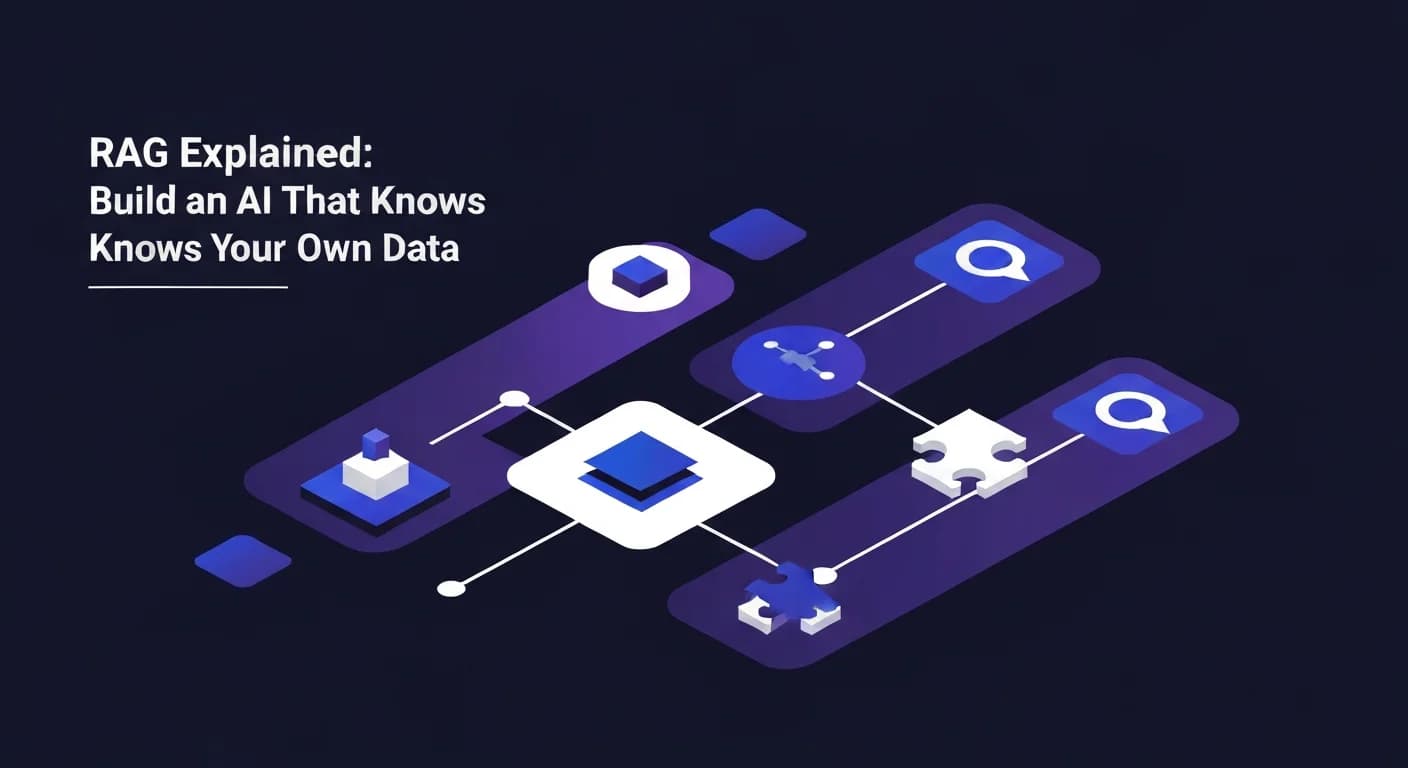
Retrieval-Augmented Generation lets you connect any LLM to your own documents, databases, and knowledge bases — no fine-tuning required.

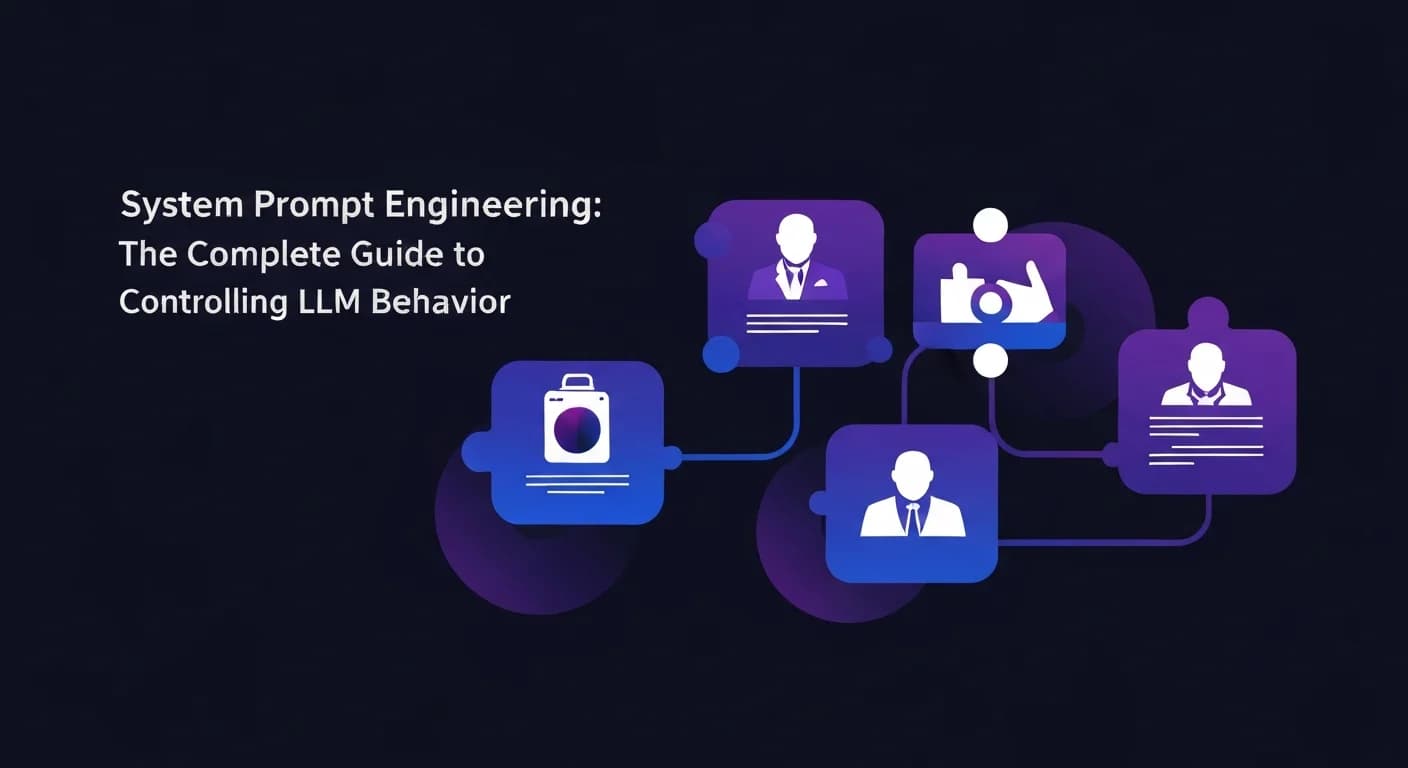
System prompts are the most powerful lever you have over LLM behavior. Learn how to write them properly.

Five practical techniques to cut your LLM API spend in half — model selection, semantic caching, prompt compression, fallback routing, and smart budgeting. With real cost numbers in ₹.

Learn how chain-of-thought prompting works under the hood, when to use it, and how to implement zero-shot, few-shot, and tree-of-thought variants without blowing your token budget.

A step-by-step guide to connecting n8n AI Agent and OpenAI nodes to Claude, GPT-4o, and Gemini via AICredits — no USD billing, no international card, works with UPI.

A step-by-step Python tutorial for routing requests to GPT-4o, Claude, Gemini, and DeepSeek through a single API key — with cost tracking in ₹ for every call.

If you are building AI apps with Claude Code, Cursor, or Windsurf and need API keys for GPT-4o, Claude, or Gemini — here is how to get them billed in INR with no international card required.

Step-by-step guide for Indian developers to access Anthropic's Claude models and pay in rupees via UPI or net banking, with no international card needed.

Shipping an LLM feature without evals is flying blind. Here's how to build evaluation systems that tell you if your prompts are actually working.

Unexpected AI bills have killed startups. Here's how to forecast your LLM costs accurately before you go live — with real formulas and a cost calculator.

An LLM API gateway sits between your application and language model providers. Here is what it does, why you need one, and when self-hosted vs managed makes sense.

A practical cost breakdown for Indian developers choosing between OpenAI GPT-4o and Anthropic Claude 3.5 Sonnet — token prices, INR conversion, and which model wins for your use case.

If your app passes user input to an LLM, you're vulnerable to prompt injection. Here's what it is, real attack examples, and how to defend against it.

A practical guide to building a cost-efficient LangChain agent in Python using affordable models available in India, with real INR cost breakdowns per tool call.

AICredits now gives engineering teams one API, one wallet, and one usage ledger across OpenAI, Claude, Gemini, and more.

A practical routing pattern for multi-provider resiliency and graceful degradation when a primary model slows down or fails.

How to convert noisy token-level AI usage into clear month-end accounting with explainable per-request charges.

A migration checklist to move existing OpenAI clients to AICredits in minutes while preserving request shape and tooling.

What to monitor in a unified AI gateway: latency, provider errors, fallback rates, token drift, and wallet burn.

A recap of shipping velocity: improved docs IA, model routing safeguards, and better wallet-billing diagnostics.
Start from docs quickstart, then move to API reference and pricing formula pages for production integration.